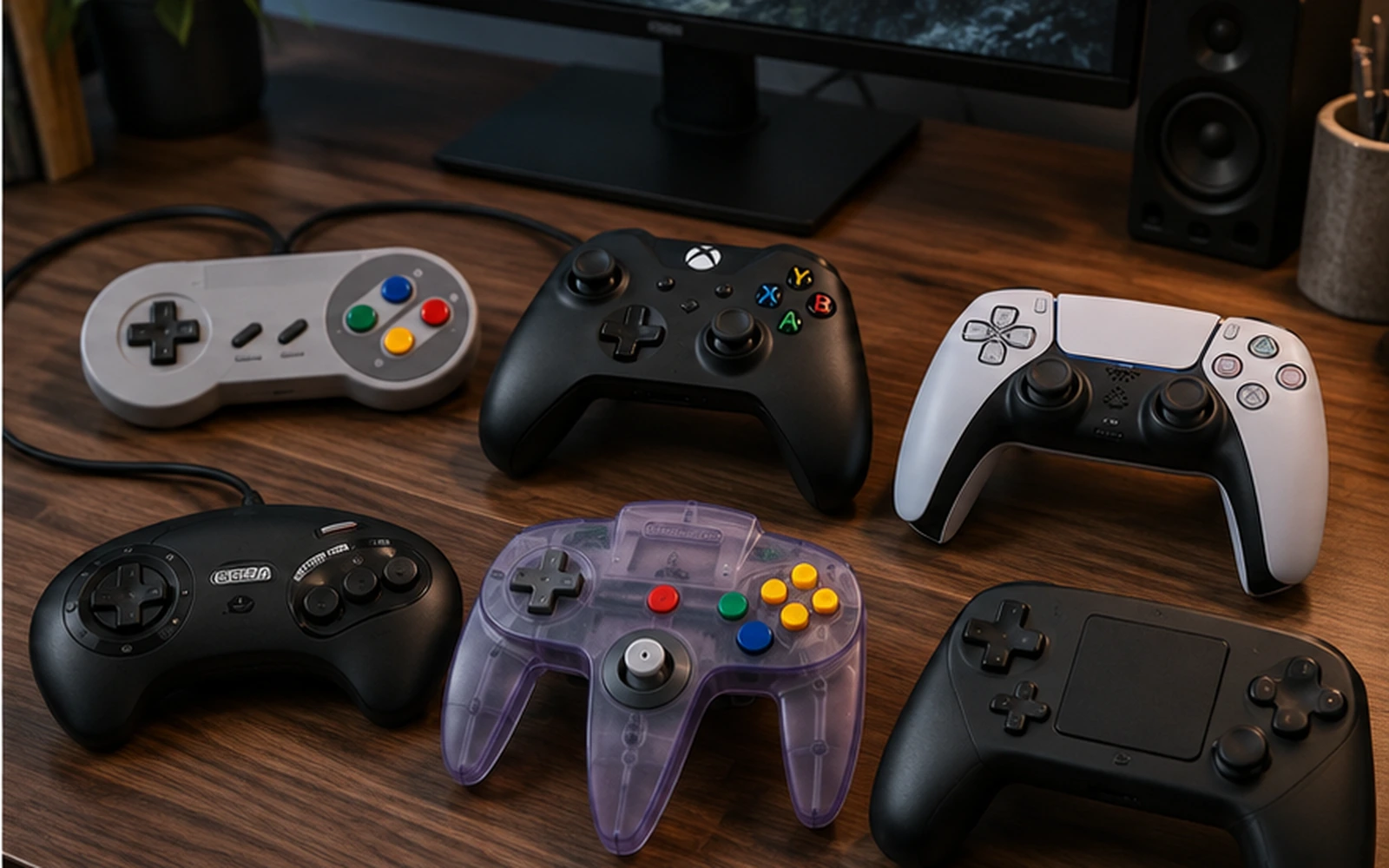
The best controller is not the one with the longest feature list. It is the one whose shape, buttons and input style match the games you play most.
Start with the D-pad
For platformers, puzzle games and classic 2D titles, the D-pad matters more than extra paddles or software profiles. Look for a clean pivot, distinct directions and diagonals that do not trigger accidentally.
Analogue stick feel is personal
Stick height, tension, dead zone and gate shape can change aiming more than specifications suggest. If you play shooters or racing games, test the controller in the genres you actually use rather than judging it only in menus.
Triggers vs shoulder buttons
Analogue triggers are useful for throttle and brake control, while short digital shoulder buttons can feel faster for older action games. A controller designed around one style may be awkward for the other.
Wired or wireless?
Modern wireless controllers can be excellent, but wired operation removes battery management and simplifies troubleshooting. For a permanent desk setup, wired is often convenient. For a living room, wireless comfort usually wins.
Compatibility matters more than branding
Check how the controller is detected by your operating system and by the games you play. Some titles expect a particular button naming convention, while emulators may need manual mapping. Good software support can be more valuable than one extra hardware feature.
One controller does not need to do everything
Many players are happier with two pads: a modern analogue controller for current games and a compact D-pad-focused controller for retro titles. That is often cheaper than chasing one premium device that compromises both jobs.